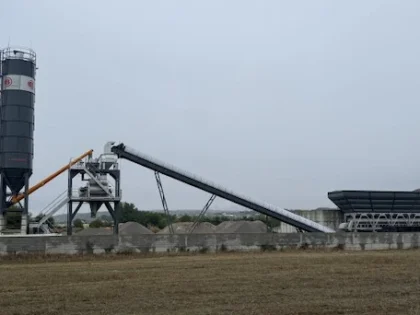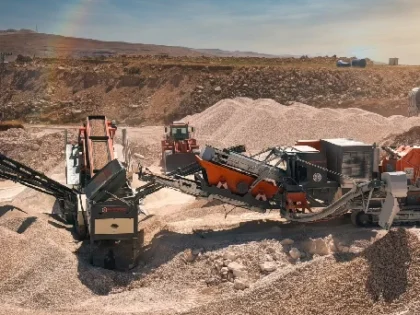



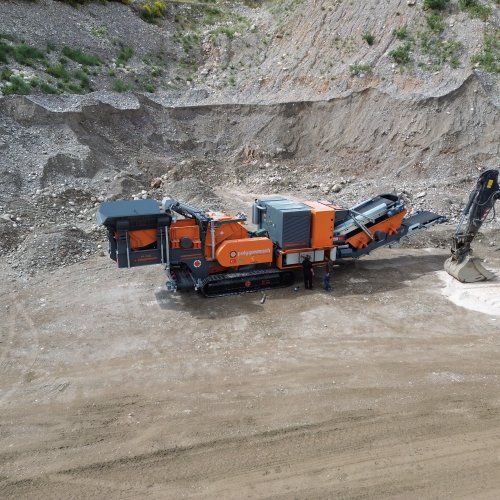
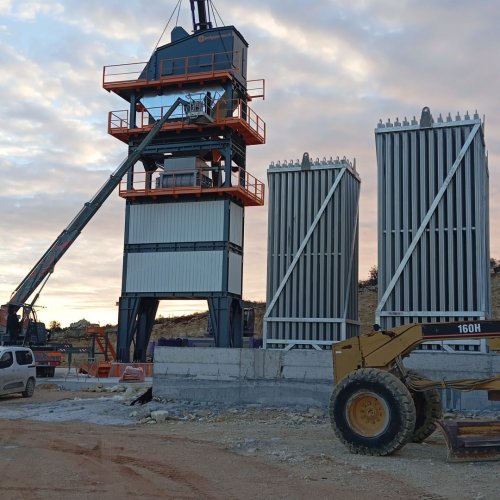
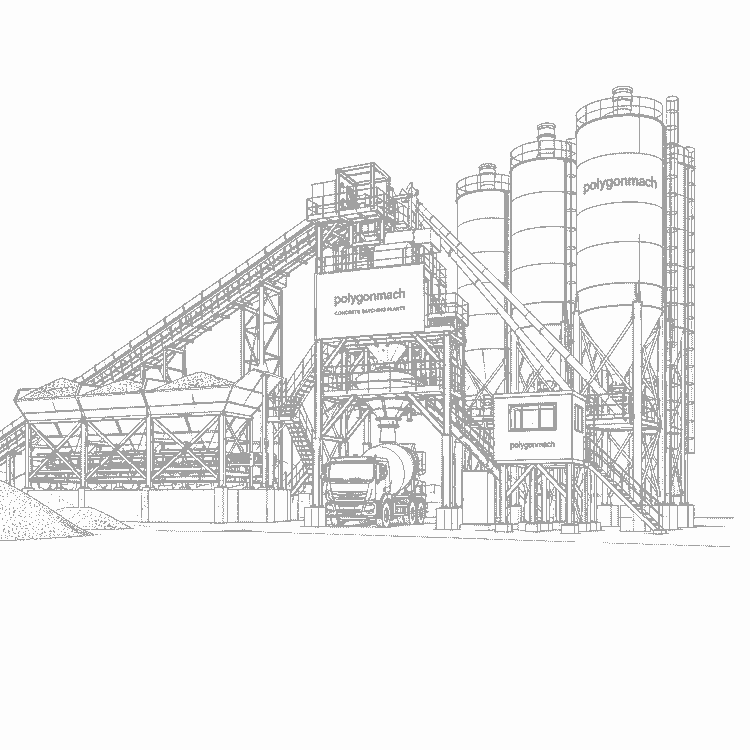

The 120–160 TPH asphalt plant is among the industrial facilities designed to provide continuous and balanced production in medium and high-capacity road construction projects. Thanks to its hourly production range, it offers efficient use in both urban asphalt applications and large-scale infrastructure projects. Controlled mix ratios and automation-supported systems contribute to achieving asphalt quality that meets standards.
The 120–160 TPH asphalt plant offers operational ease in production processes with its flexible structure suitable for working with different aggregate types and formulations. Energy efficiency is ensured through the harmonious operation of heating, drying, and mixing units, while maintenance and operating costs are kept balanced. With these features, it stands out as a reliable solution for projects requiring long-term and intensive asphalt production.
What is the 120–160 TPH Asphalt Plant?
The 120–160 TPH asphalt plant is an industrial production facility developed for medium and high-scale projects, with an asphalt production capacity of 120 to 160 tons per hour. This capacity range offers balanced production performance for both urban road construction and long-term infrastructure projects. Thanks to its continuous and controlled production structure, the homogeneity and quality standards of the asphalt mix are maintained.
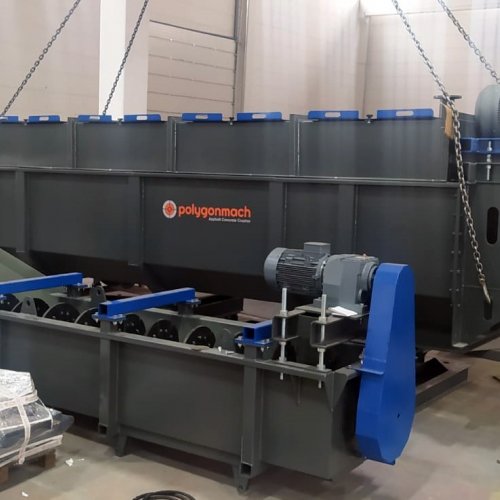
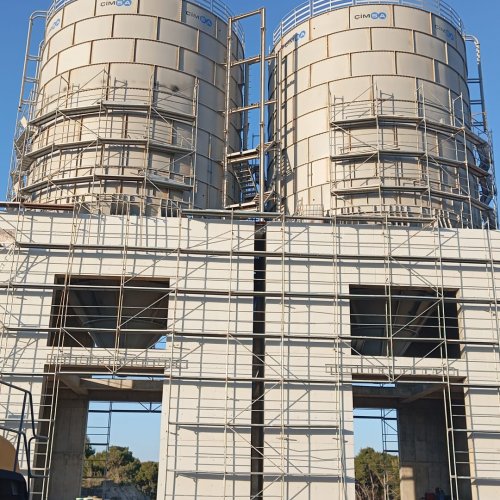
These types of asphalt plants consist of integrated systems where aggregate drying, heating, mixing, and storage units work together harmoniously. Thanks to automation-supported control panels, the production process can be monitored and mix ratios can be precisely adjusted. This allows for the reliable application of different asphalt formulations.
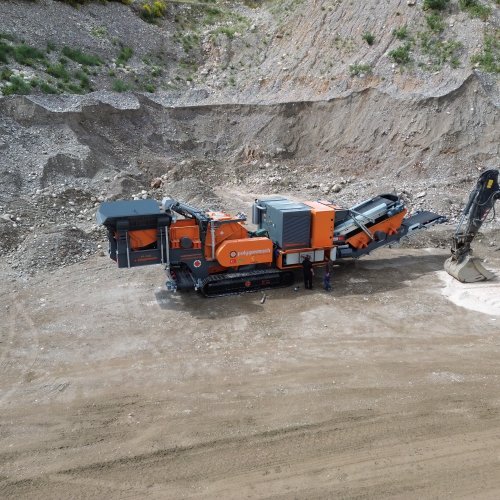
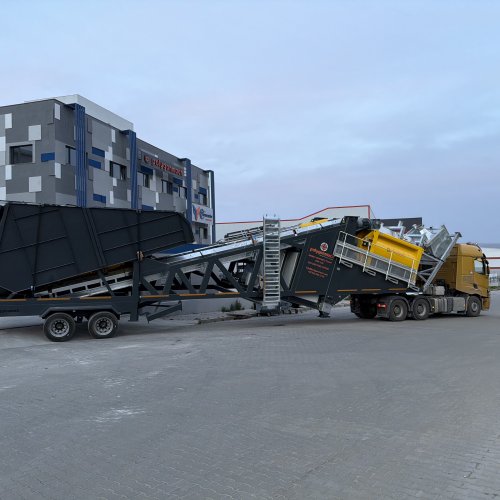
120–160 TPH capacity asphalt plants can be planned as stationary or mobile depending on the needs of the project site. Its structure, which adapts to a high production rate, reduces time losses and contributes to the planned progress of the work schedule. In this respect, this capacity range creates an ideal balance between production power and operational efficiency.
Advantages of 120–160 TPH Asphalt Plants
Asphalt plants with a capacity of 120–160 TPH offer both production power and operational control. This capacity can meet high asphalt demand in a short time while ensuring the production process remains manageable. It provides a significant advantage, especially in projects where time pressure is a concern.
These plants, with their balanced energy usage, help keep fuel consumption under control. Automation systems prevent non-standard situations in the production process, supporting quality stability. This increases both product quality and operational reliability.
Durable mechanical components and a robust construction reduce the need for maintenance during long-term use. This ensures predictable operating costs.
Key advantages include:
- Capacity suitable for high production rates
- Homogeneous and controlled asphalt production
- Balance in energy and fuel consumption
- Adaptability to different mix recipes
- Long-lasting and robust system structure
These advantages make 120–160 TPH capacity asphalt plants a strong option in terms of both production continuity and operational efficiency. Thanks to its balanced capacity structure, it can be reliably preferred in projects of different scales.
Application Areas of 120–160 TPH Asphalt Plants
120–160 TPH asphalt plants are widely used in projects with high asphalt demand. Sufficient production capacity ensures that asphalt laying work on site progresses in a planned and uninterrupted manner. This offers a significant advantage, especially in projects covering large areas.
Highway and motorway construction projects are the areas where asphalt plants in this capacity range are most frequently preferred. It is also effectively used in urban road renovation projects, ring roads, and connecting roads. In these applications requiring continuous production, plant performance is crucial.
In addition, 120–160 TPH asphalt plants are preferred in airport runways, industrial zones, and large infrastructure projects. The ability to produce durable asphalt mixtures ensures the safe use of these plants in various field conditions.
Common areas of application:
- Highway and motorway projects
- Urban road and street works
- Airport runway and apron applications
- Industrial and logistics area arrangements
- Large-scale infrastructure projects
This wide range of applications demonstrates that these asphalt plants offer a versatile production solution. Its adaptability to different project types makes this capacity range a widespread and reliable option in the sector.
Asphalt Plant 120–160 TPH Pricing and Selection Criteria
When investing in a 120–160 TPH asphalt plant, price should not be the sole determining factor. The plant's suitability for project requirements, long-term operational performance, and technical capabilities should be evaluated together. The right choice directly impacts both production efficiency and operating costs.
Factors Affecting Price
Asphalt plant prices vary depending on the quality of equipment used, the level of automation, and system hardware. Elements such as filtering systems, fuel type, and compliance with environmental standards affect the total cost. Furthermore, whether the plant is designed as stationary or mobile is also a significant factor determining pricing.
Correct Capacity Selection According to the Project
Capacity selection should be made considering the project's daily asphalt needs and operating time. A 120–160 TPH capacity offers a balanced solution for high-volume projects. However, selections made without properly analyzing site conditions, logistical capabilities, and project duration can lead to a loss of efficiency.
After-Sales Support and Service
After-sales technical support plays a critical role in asphalt plant investments. Spare parts supply, maintenance services, and technical service support ensure the long-term, trouble-free operation of the plant. Solutions with a strong service infrastructure guarantee operational continuity.
Polygonmach Asphalt Plant
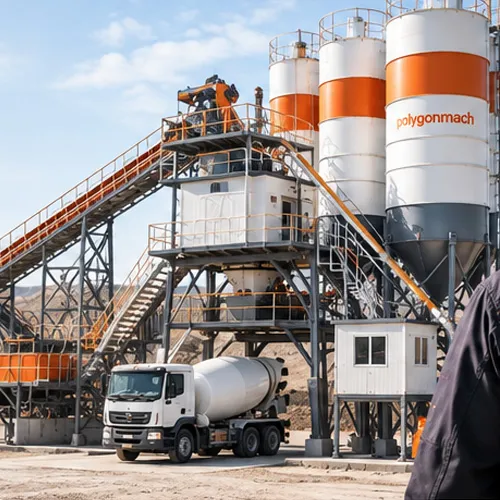
Asphalt plants developed by Polygonmach are powerful production systems designed especially for medium and high-capacity projects. Polygonmach solutions are planned with an engineering approach suitable for field conditions and optimized to meet on-site production needs. This ensures both quality and continuity in asphalt production processes.
Polygonmach asphalt plants utilize high-performance mixing technologies integrated with automation-supported control systems and robust heating and drying units. With different capacity options and modular configurations, Polygonmach asphalt plants can be used reliably in both stationary and mobile applications. Offered with a wide service network and after-sales supportw services, these solutions increase operational continuity and plant efficiency.
For detailed information and orders, please contact us.